
Kitchen ventilation isn't a one-size-fits-all decision, and the right choice depends heavily on cooktop placement, cabinetry layout, and overall kitchen design. Range hoods for kitchens come in a wide variety of styles, each suited to different structural setups and design goals, from compact under-cabinet units to statement-making island installations. Understanding the differences between these styles helps homeowners choose ventilation that performs well and fits naturally into their kitchen's layout.
Matching Hood Style to Cooktop Placement
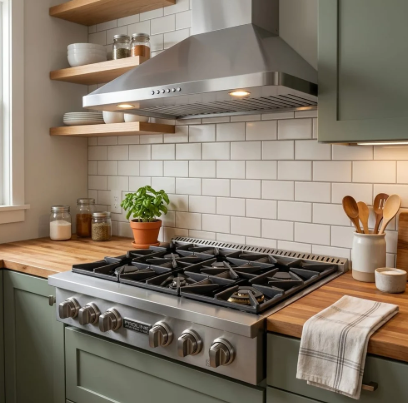
Cooktop location plays one of the biggest roles in determining which hood style makes sense for a given kitchen. Wall-mounted hoods work well for cooktops positioned against a wall, offering secure installation and strong capture performance directly above the cooking surface. Island cooktops, on the other hand, require ceiling-mounted hoods since there's no adjacent wall for support, while cooktops beneath existing cabinetry are often best served by compact under-cabinet units that integrate directly into the surrounding cabinetry.
Airflow Requirements Across Different Styles
Regardless of style, fan performance measured in cubic feet per minute remains one of the most important specifications to consider when comparing range hoods for kitchens. Higher-output cooktops, particularly those with multiple high-BTU burners, generally require stronger CFM ratings to effectively clear smoke and grease during heavier cooking tasks. Undersized units, regardless of how well they match the kitchen's aesthetic, tend to underperform when actual cooking output exceeds their airflow capacity.
Ducted Versus Ductless Considerations
Ventilation style also depends on whether ducted or ductless configurations are feasible for a given kitchen. Ducted hoods vent air and byproducts directly outside, providing more thorough removal of heat, humidity, and smoke, while ductless models filter and recirculate air back into the kitchen, which suits spaces where exterior ductwork isn't practical, such as many apartments or condominiums. This decision often comes down to structural feasibility as much as personal preference, particularly in multi-unit buildings with limited access to exterior walls.
Design Considerations Beyond Function
Beyond raw performance, many homeowners treat hood selection as a design opportunity, particularly with wall-mounted or island styles that serve as visible focal points in the kitchen. Material choices ranging from brushed stainless steel to custom-clad enclosures allow range hoods for kitchens to complement broader design themes, whether that means a sleek modern aesthetic or a more traditional, custom-built appearance that blends with surrounding cabinetry.
Noise Levels and Everyday Usability
Fan noise varies significantly across different hood styles and models, and this becomes an important practical consideration for households that use their range hood daily. Multi-speed settings allow users to run quieter airflow during lighter cooking tasks and increase fan strength when needed for smoke-heavy cooking methods like searing or frying. Comparing decibel ratings across models helps buyers avoid units that perform well on paper but prove disruptively loud during regular use.
Installation and Long-Term Maintenance
Installation requirements differ meaningfully between styles, with under-cabinet and wall-mounted units generally involving simpler installation than island hoods, which require additional ceiling support and structural planning. Regardless of style, ongoing maintenance typically centers on regular filter cleaning, with charcoal filters in ductless systems requiring periodic replacement to maintain effective odor control over time.
Conclusion
For homeowners seeking both strong performance and a refined aesthetic, luxury range hoods for kitchens offer an appealing combination of premium materials and dependable ventilation, often serving as a design centerpiece rather than a purely functional appliance. Choosing the right style ultimately comes down to matching hood type, airflow capacity, and design preferences to the specific demands of the kitchen's layout and cooking habits.


Write a comment ...